Connecting Global Consciousness
Evolving the original PEAR lab experiments into a modern global network bridging science and collective human experience.

25+
Years of Research
Introduction
Bridging Science and the Human Spirit
Developed and maintained by the donor-funded HeartMath Institute, the Global Consciousness Project 2.0 is collaborating with scientists and engineers around the world to research the interconnectivity between human consciousness and the physical world.
Our mission is to explore the hypothesis that human consciousness interacts with physical systems, particularly during periods of intense global focus or shared emotion.
Global Reach
Nodes active on all continents collecting continuous data.
Rigorous Method
Peer-reviewed protocols and open-source data analysis.
History
The donor-funded HeartMath Institute was founded in 1991 and is the home of GCP 2.0. It builds upon the original Global Consciousness Project (GCP 1) that was created in 1997 by Dr. Roger Nelson and a group of volunteers. They sought to detect, quantify, and study human consciousness on a deeper level.
The team distributed physical random number generators on a global scale and measured the impact that large-scale, synchronized human emotion and focus of attention had on the output.
Can we tip the scales using a global network of RNGs to influence the outcome?
Our hypothesis: Yes

History Highlights

By 2015, the GCP 1 Team had analyzed 500 pre-registered world events as well as exploring hundreds of others, from love and compassion meditations to tragedies and natural disasters.

The data showed with over trillion to one odds that when people experience a collective emotional response, there is a tangible effect on our physical world.

Today, we are expanding our network of improved RNG devices across the world to further examine the real-world effects of human consciousness.
How We Do It
We use a global network of Random Number Generators (RNGs) that detect and quantify important aspects of human consciousness.
Each next generation RNG listens to subtle shifts in randomness and streams signals into a shared network, giving researchers a live view of collective attention.
By combining thousands of synchronized data streams, we can surface patterns that single devices would never reveal.

NextGen RNGs
Global Network Devices
Purpose-built hardware designed for consciousness detection.
Methodology FAQs
We measure the effects of human consciousness via a globally distributed network of physical devices that produce random numbers. These devices are called random number generators (RNGs). Our hypothesis is that shared consciousness can cause the network to stop behaving in a random fashion. This will occur either when large numbers of people share a focused attention towards the same thing, such as a global event that draws out compassion, or smaller numbers of people are in a more coherent state and hold a collective intention. In other words, our collective consciousness can change the physical world.


Quantum Avalanche
Zener Diode Signal
Randomness extracted from electron behavior at the circuit level.
RNG Technology
Our RNGs produce random numbers every second through a string of 1s and 0s.
Quantum noise inside the Zener diode creates a stream of pure randomness, which we capture and transform into measurable signals.
We then filter out environmental noise so the remaining patterns can be confidently attributed to shared human consciousness.
RNG Technology FAQs
An RNG is a device that generates random numbers. In a sense, it is like an electronic coin flipper, only instead of generating Heads or Tails, it generates a 0 or 1 bit. These bits are generated at high speed and combined to produce many random numbers every second.
Meet the Team
Championing humanity through science since 1991
A multi-disciplinary team of scientists, engineers, and researchers dedicated to exploring the boundaries of consciousness.
HMI Leadership

Sara Childre
President and CEO

Katherine Floriano
Vice President of Advancement of Major and Planned Gifts

Brian Kabaker
Chief Financial Officer and Director of Sales
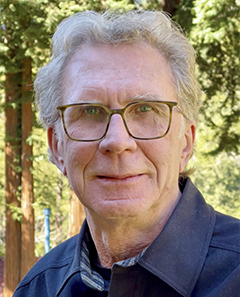
Rollin McCraty, Ph.D.
Executive Vice President and Director of Research
GCP 2.0 Research Team
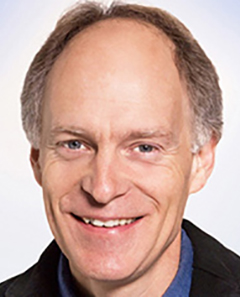
Mike Atkinson
Research center laboratory manager

Chris Cockrum
Mathematician and Embedded systems engineer

Scott Davies
Computer science and data analytics

Annette Deyhle, Ph.D.
Research coordinator

Alex Gomez-Marin, Ph.D.
Associate Professor
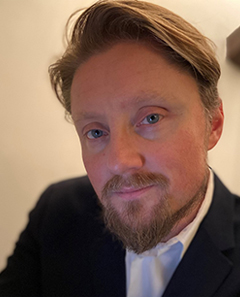
Ulf Holmberg, Ph.D.
Senior analyst and Functional lead
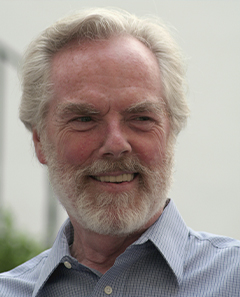
Roger Nelson, Ph.D.
Founder and Director
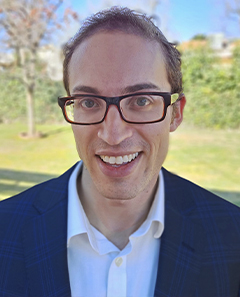
Nachum Plonka, Ph.D.
Principal data scientist
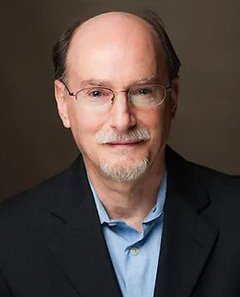
Dean Radin, Ph.D.
Chief scientist

Jeff Shafe
Webmaster

Avanti Shrikumar, Ph.D.
Parapsychology and Novel statistical analyses
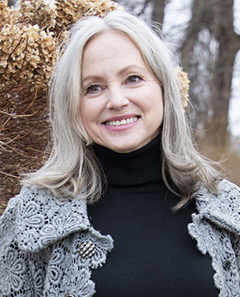
Claudia Welss
Lead Citizen Scientist